
Security awareness training is the ongoing practice of teaching the people in your business to recognise everyday attempts to trick them — the fake invoice, the urgent request that appears to come from the owner, the login page that is not quite right — and to report those attempts without hesitating. Done well it is short, frequent, relevant and blame-free. Done the usual way it is a long video once a year that nobody remembers by Friday.
You can buy the best security tools on the market and still be undone by one well-timed click. Employees are the largest attack surface in any business — but trained well, they are also your best early-warning system. The difference comes down to how you train them, not how much you spend.
Most security failures still run through a person, not a machine. Verizon's 2026 Data Breach Investigations Report found the human element present in 62% of breaches, up slightly from 60% the year before. That is not an argument for blaming staff — it is the reason training the people is the highest-value hour you will spend.
Figure verified 31 July 2026. Source linked above.
Why does the annual security seminar not work?
Because a once-a-year, two-hour compliance video is forgotten within days. People tune out, click "next" until the progress bar fills, and retain almost nothing that would help them on a Tuesday afternoon four months later. The format is built to prove the training happened, not to change what anyone does.
The deeper issue is that it treats security as a checkbox rather than a habit, and habits are exactly what you are trying to build. Spotting a suspicious message is a reflex, and reflexes come from repetition in small doses, the same way a short language lesson every week beats one long weekend of cramming.
There is a cultural cost as well. When training appears once a year, in the same tone as the fire-safety module, staff quietly learn that security belongs to somebody else. What you want is the opposite: people who notice something odd and think it is completely normal to mention it.
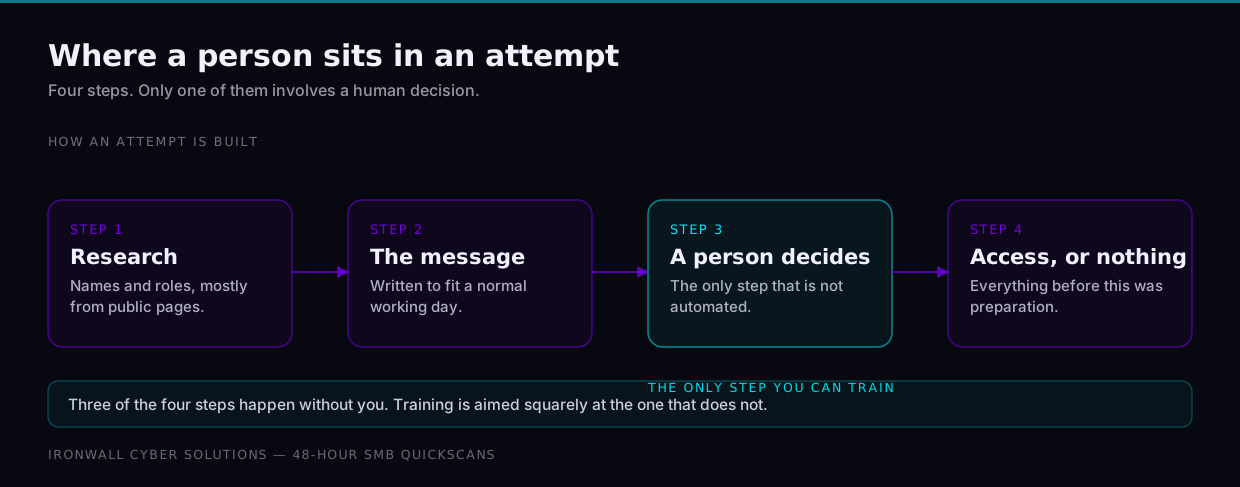
What does security training that works look like?
Short, frequent, and recognisably about your business. Ten-minute lessons every month beat a marathon session once a year, because little-and-often keeps the topic fresh and fits inside a real workday without breeding resentment.
- Use examples from your own industry and your own tools. A lesson built around the invoice format your team really sees lands far better than a generic scenario about a bank nobody uses.
- Practise with occasional simulated phishing messages. The point is not to catch people out; it is to give them safe repetitions at spotting the real thing before it arrives.
- Teach the reason behind every rule. Explain why an unexpected change to payment details needs a phone call to a known number, and people will apply that judgment to situations you never scripted.
- Keep each session to one idea. One habit taught properly and repeated beats six covered once and forgotten.
Why does blame-free reporting matter so much?
Because a mistake somebody hides is a mistake you cannot contain. If reporting a bad click gets a person embarrassed in front of colleagues, they will stay quiet and hope nothing comes of it, and the hours where a quick response would have made the most difference pass unused.
Security awareness is not an event people attend. It is a reflex they develop through repetition, in a workplace where speaking up is safe.
So build the culture deliberately. Thank people who report suspicious messages, including the false alarms, and say so publicly. Make the reporting route obvious and quick — one address or one button, not a form. When someone does click something they should not have, treat it as useful information about where the training needs work, never as a disciplinary matter. You want reporting to feel like a win rather than a confession, because the business that hears about a problem early is the one that gets to choose what happens next.
How do you know the training is working?
By watching a small number of signals over months rather than weeks. Attendance and completion rates tell you very little; behaviour tells you everything. These four are enough for most small businesses, and each one is measured from what your team already does. Review them once a quarter, look for direction rather than perfection, and let the results decide what next month's lesson covers.
| Signal | What it tells you | Healthy direction |
|---|---|---|
| Reporting rate | How many people flag something suspicious rather than deleting it quietly | Rising, and spread across the whole team |
| Time to first report | How long a suspicious message sits before anyone raises it | Falling from days towards minutes |
| Simulation click rate | Whether practice is turning into a genuine pause-and-check reflex | Trending down, with no single team left behind |
| Repeat questions | Which topics people still ask about after a lesson has run | Shrinking list, and it tells you what to teach next |
The bottom line
Turning employees into your strongest defence takes the right rhythm rather than a big budget. Keep it short, keep it frequent, make it relevant, and above all make reporting safe. A team that pauses, questions and speaks up is worth more than any single tool.